ภาพดาราศาสตร์วันนี้ — 26 มีนาคม 2569
คัดโดย NASA (Astronomy Picture of the Day) · สรุปภาษาไทยโดย The World Ready · ไม่ได้แปลคำต่อคำทั้งก้อน
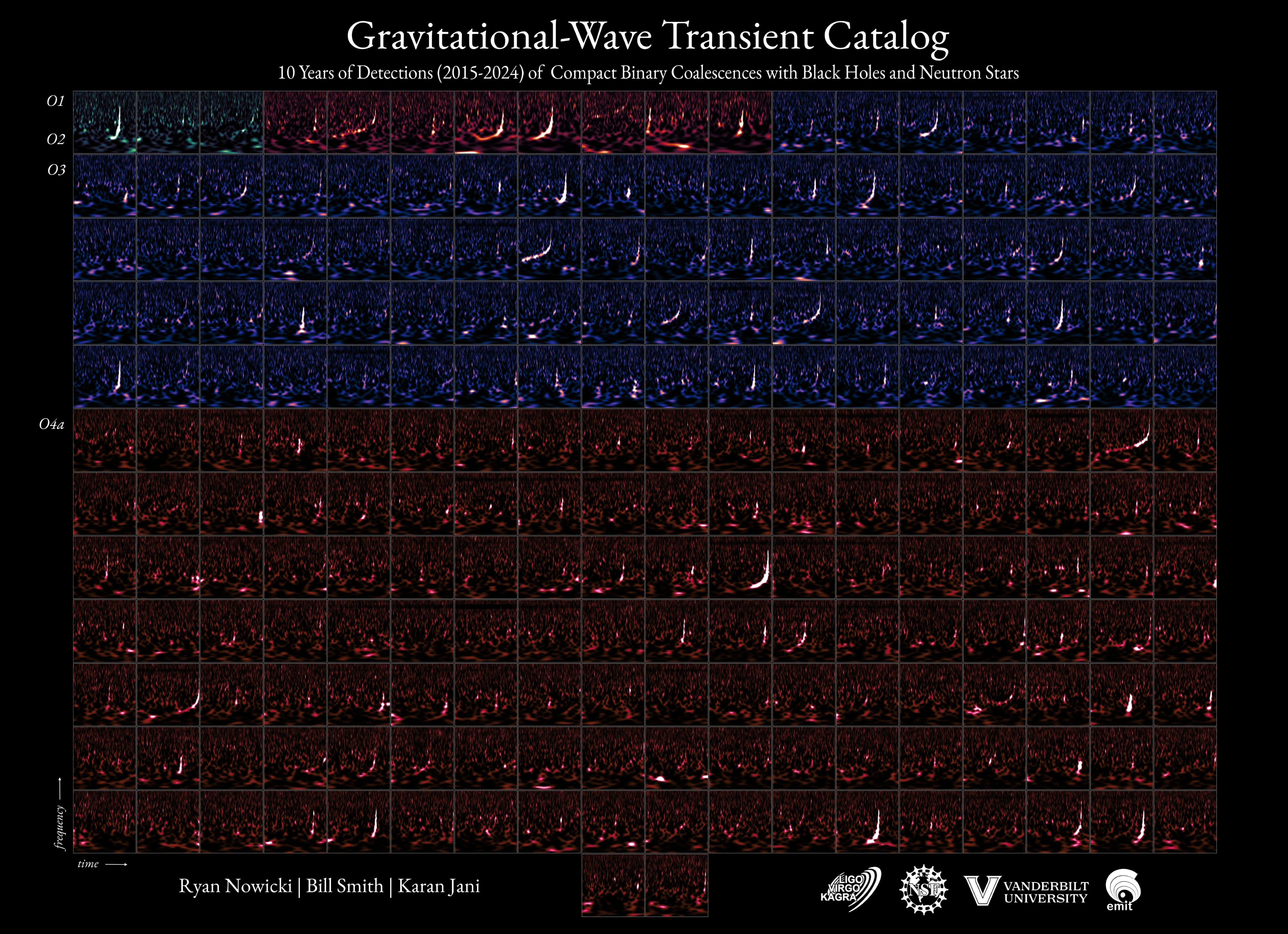
Black Holes and Neutron Stars: 218 Mergers and Counting
วันนี้ NASA เลือกภาพหมวดหลุมดำ ชื่อ “Black Holes and Neutron Stars: 218 Mergers and Counting” เป็นภาพดาราศาสตร์ประจำวัน
วัตถุที่แรงโน้มถ่วงสูงจนแสงหนีไม่พ้น — เห็นได้จากจานมวลสารรอบๆ
ที่มา: NASA APOD · ภาพโดย NASA / ภาคี · เปิดภาพความละเอียดสูง
คำอธิบายต้นฉบับ (ภาษาอังกฤษ)
What is the sound of two black holes merging in deep space? Sound waves don't propagate in vacuum, but gravitational waves do. In 2015 we were able to "hear" them for the first time and confirm one of Albert Einstein's theoretical predictions. Each square on the grid of the featured image represents one of the gravitational wave detections announced so far by the LIGO-VIRGO-KAGRA Collaboration. These plots show how the binary pair accelerates in their orbit around each other towards merger: the rising frequency effect is called a "chirp". Although there are significantly more neutron stars than black holes, most of the detections are binary black hole mergers. That happens because black holes are heavier and their signals are louder and can be seen farther away, resulting in more detections. These events are rare, and we don't expect to see one close by in our Galaxy any time soon. But they are happening continuously throughout the cosmos.
คำถามที่พบบ่อย
NASA APOD คืออะไร?
Astronomy Picture of the Day คือโครงการของ NASA ที่คัดภาพดาราศาสตร์วันละหนึ่งภาพตั้งแต่ปี 1995 พร้อมคำอธิบายจากนักดาราศาสตร์ หน้านี้ดึงจาก API ทางการแล้วสรุปเป็นภาษาไทย
ภาพนี้ใช้ฟรีได้ไหม?
ภาพที่ NASA ผลิตเองส่วนใหญ่เป็นสาธารณสมบัติของรัฐบาลสหรัฐฯ แต่บางวันเป็นภาพของนักถ่ายภาพรับเชิญ ต้องดูเครดิตด้านล่างภาพ — เราใส่ชื่อเจ้าของทุกครั้งที่มี
ทำไมบางวันเป็นวิดีโอ?
NASA เลือกสื่อที่ดีที่สุดของวันนั้น อาจเป็นภาพนิ่ง วิดีโอ YouTube หรือแอนิเมชันจากกล้องอวกาศ
ต่างจากหน้าดาวเทียมของเว็บนี้อย่างไร?
หน้าดาวเทียมโชว์ตำแหน่งโคจรแบบเรียลไทม์ หน้านี้โชว์ภาพสวยของจักรวาลที่ NASA คัดมาให้ดูวันละภาพ พร้อมบริบทภาษาไทย
หน้านี้ใช้ NASA APOD API อย่างเป็นทางการ แคชไว้บนเซิร์ฟเวอร์เรา ไม่ได้คัดลอกเว็บต้นทางมาทั้งหน้า คำอธิบายภาษาไทยเป็นการสรุปบริบทโดยกองบรรณาธิการ The World Ready