ภาพดาราศาสตร์วันนี้ — 11 มีนาคม 2569
คัดโดย NASA (Astronomy Picture of the Day) · สรุปภาษาไทยโดย The World Ready · ไม่ได้แปลคำต่อคำทั้งก้อน
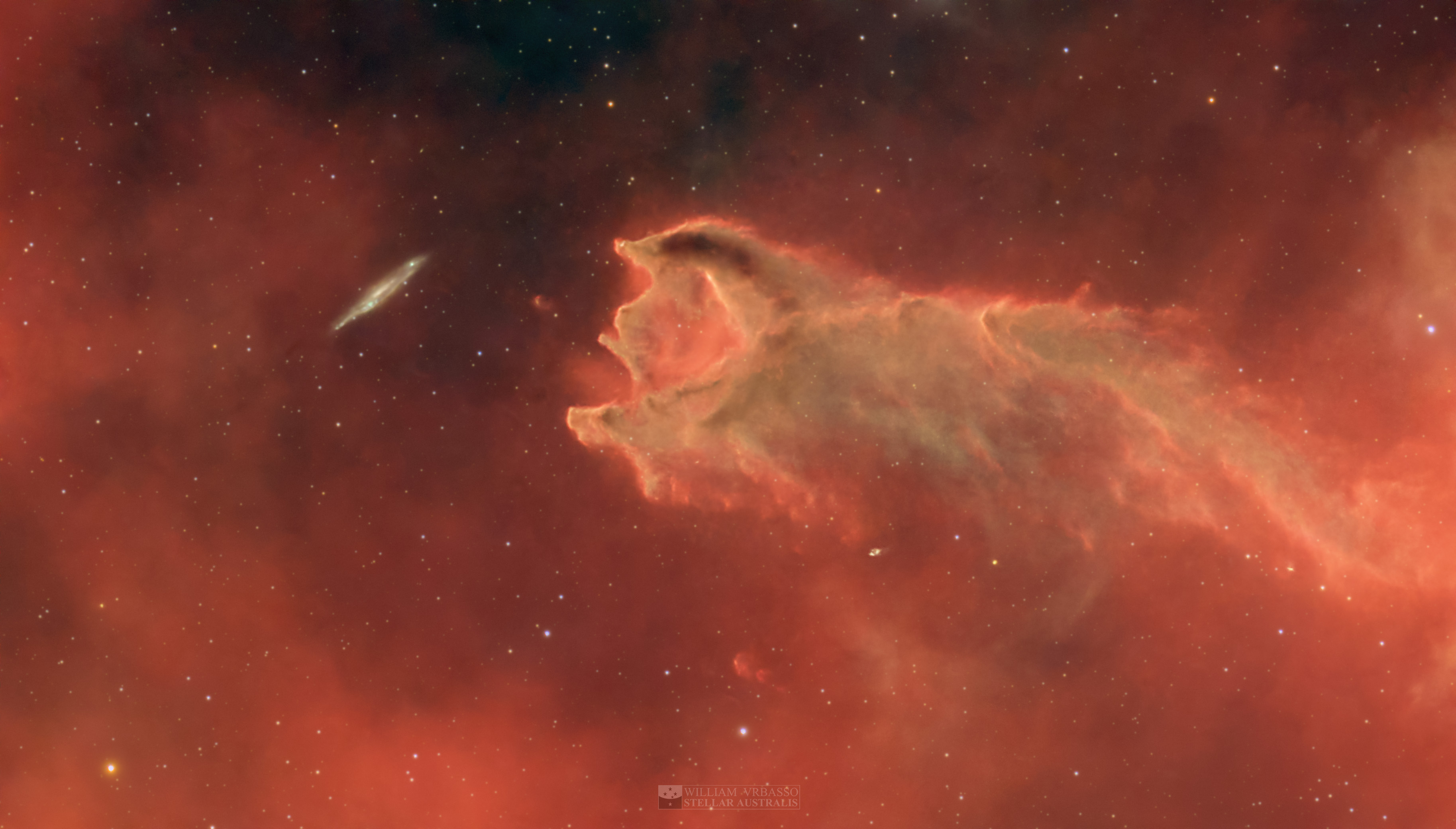
CG 4: The Globule and the Galaxy
วันนี้ NASA เลือกภาพหมวดเนบิวลา ชื่อ “CG 4: The Globule and the Galaxy” เป็นภาพดาราศาสตร์ประจำวัน
เมฆแก๊สและฝุ่นในอวกาศ — ที่กำเนิดดาวดวงใหม่ หรือซากดาวที่ระเบิดแล้ว
ที่มา: NASA APOD · เครดิตภาพ: William Vrbasso · เปิดภาพความละเอียดสูง
คำอธิบายต้นฉบับ (ภาษาอังกฤษ)
Is this a cosmic monster ready to devour an unsuspecting galaxy? Thankfully, that is not the case. The red “monster” shown in the featured image is Cometary Globule CG 4, 1,300 light-years away in the Constellation Puppis. CG 4 is a molecular cloud, where hydrogen becomes cold enough to form molecules that can be brought together by gravity to create stars. The shape of CG 4 resembles that of a comet, but its head is 1.5 light-year in diameter and its tail is 8 light-years long; for comparison, the distance from the Earth to the sun is only 8 light-minutes. Astronomers believe that the tail of a cometary globule could have been shaped by a nearby supernova explosion or by irradiation from hot, massive stars. Indeed, CG 4 and other nearby globules point away from the Vela Supernova Remnant, at the center of the Gum Nebula. The edge-on spiral galaxy, ESO 257-19, is more than a hundred million light-years beyond CG 4, and is completely safe from the “monster”.
คำถามที่พบบ่อย
NASA APOD คืออะไร?
Astronomy Picture of the Day คือโครงการของ NASA ที่คัดภาพดาราศาสตร์วันละหนึ่งภาพตั้งแต่ปี 1995 พร้อมคำอธิบายจากนักดาราศาสตร์ หน้านี้ดึงจาก API ทางการแล้วสรุปเป็นภาษาไทย
ภาพนี้ใช้ฟรีได้ไหม?
ภาพที่ NASA ผลิตเองส่วนใหญ่เป็นสาธารณสมบัติของรัฐบาลสหรัฐฯ แต่บางวันเป็นภาพของนักถ่ายภาพรับเชิญ ต้องดูเครดิตด้านล่างภาพ — เราใส่ชื่อเจ้าของทุกครั้งที่มี
ทำไมบางวันเป็นวิดีโอ?
NASA เลือกสื่อที่ดีที่สุดของวันนั้น อาจเป็นภาพนิ่ง วิดีโอ YouTube หรือแอนิเมชันจากกล้องอวกาศ
ต่างจากหน้าดาวเทียมของเว็บนี้อย่างไร?
หน้าดาวเทียมโชว์ตำแหน่งโคจรแบบเรียลไทม์ หน้านี้โชว์ภาพสวยของจักรวาลที่ NASA คัดมาให้ดูวันละภาพ พร้อมบริบทภาษาไทย
หน้านี้ใช้ NASA APOD API อย่างเป็นทางการ แคชไว้บนเซิร์ฟเวอร์เรา ไม่ได้คัดลอกเว็บต้นทางมาทั้งหน้า คำอธิบายภาษาไทยเป็นการสรุปบริบทโดยกองบรรณาธิการ The World Ready