ภาพดาราศาสตร์วันนี้ — 20 เมษายน 2569
คัดโดย NASA (Astronomy Picture of the Day) · สรุปภาษาไทยโดย The World Ready · ไม่ได้แปลคำต่อคำทั้งก้อน
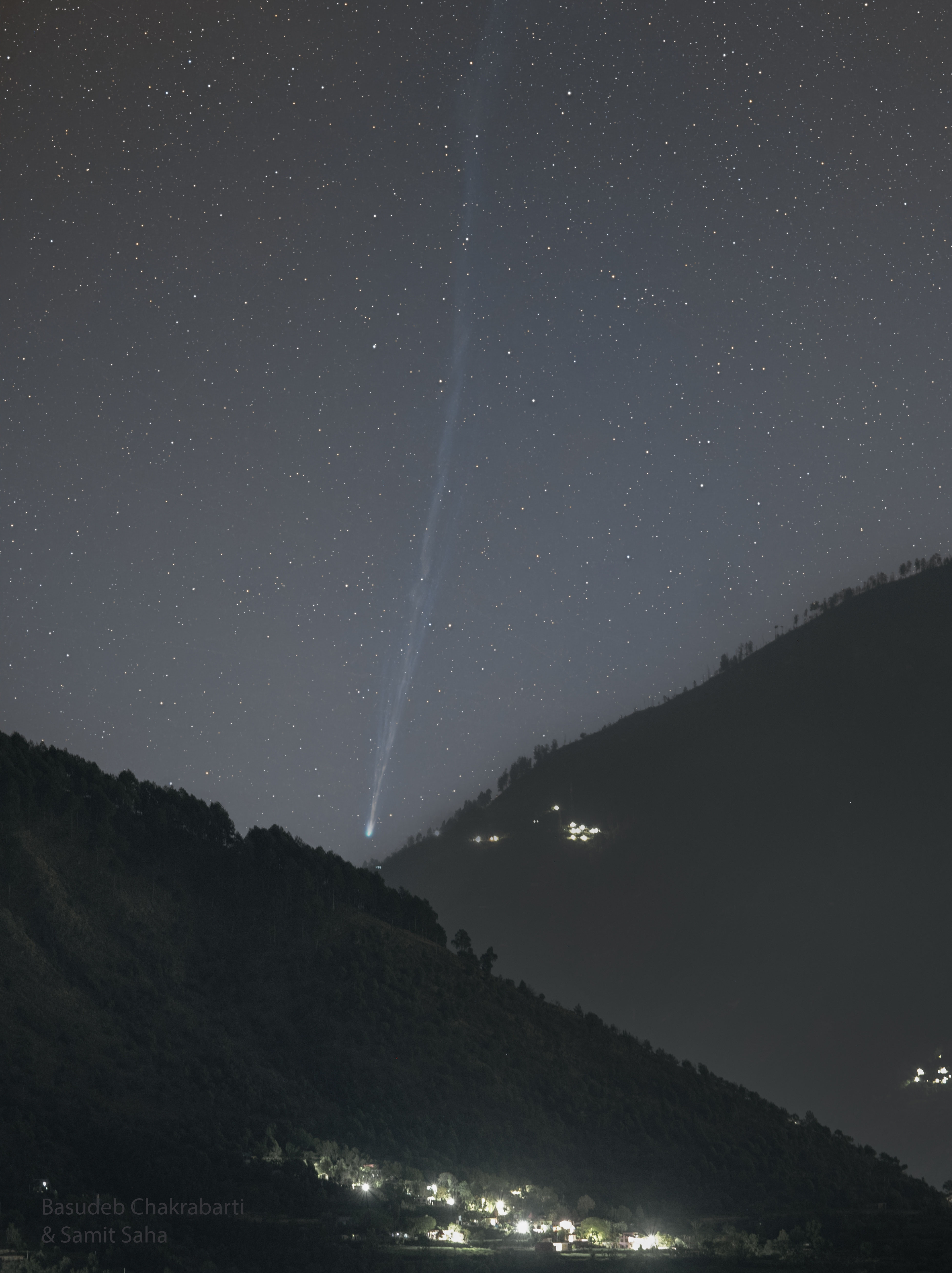
Comet R3 PanSTARRS over a Himalayan Valley
วันนี้ NASA เลือกภาพหมวดดวงอาทิตย์ ชื่อ “Comet R3 PanSTARRS over a Himalayan Valley” เป็นภาพดาราศาสตร์ประจำวัน
ดาวฤกษ์ที่ให้พลังงานชีวิตบนโลก — กิจกรรมบนผิวมีผลต่อสื่อสารและไฟฟ้า
ที่มา: NASA APOD · เครดิตภาพ: Basudeb Chakrabarti & Samit Saha · เปิดภาพความละเอียดสูง
คำอธิบายต้นฉบับ (ภาษาอังกฤษ)
The best way to see comet R3 PanSTARRS’s long tail is with a camera. This week, the recently brightened comet appears in northern skies to the east just before dawn, but is only barely visible to the unaided eye. The many-degree ion tail captured on long duration camera exposures is not unusual for a comet - it is primarily due to the Earth's nearly sideways view of the tail as it points away from the Sun. In the featured image taken last week, Comet C/2025 R3 (PanSTARRS) showed off its flowing tail through a valley between two peaks in the Himalayan mountains of India. The comet passed its closest to the Sun yesterday. As it nears its closest approach to Earth next week, a bushy dust tail may become visible. The comet is slowly moving out of northern skies and by the end of the month will be visible after sunset in southern skies as it fades and leaves our Solar System. Growing Gallery: Comet R3 PanSTARRS in 2026
คำถามที่พบบ่อย
NASA APOD คืออะไร?
Astronomy Picture of the Day คือโครงการของ NASA ที่คัดภาพดาราศาสตร์วันละหนึ่งภาพตั้งแต่ปี 1995 พร้อมคำอธิบายจากนักดาราศาสตร์ หน้านี้ดึงจาก API ทางการแล้วสรุปเป็นภาษาไทย
ภาพนี้ใช้ฟรีได้ไหม?
ภาพที่ NASA ผลิตเองส่วนใหญ่เป็นสาธารณสมบัติของรัฐบาลสหรัฐฯ แต่บางวันเป็นภาพของนักถ่ายภาพรับเชิญ ต้องดูเครดิตด้านล่างภาพ — เราใส่ชื่อเจ้าของทุกครั้งที่มี
ทำไมบางวันเป็นวิดีโอ?
NASA เลือกสื่อที่ดีที่สุดของวันนั้น อาจเป็นภาพนิ่ง วิดีโอ YouTube หรือแอนิเมชันจากกล้องอวกาศ
ต่างจากหน้าดาวเทียมของเว็บนี้อย่างไร?
หน้าดาวเทียมโชว์ตำแหน่งโคจรแบบเรียลไทม์ หน้านี้โชว์ภาพสวยของจักรวาลที่ NASA คัดมาให้ดูวันละภาพ พร้อมบริบทภาษาไทย
หน้านี้ใช้ NASA APOD API อย่างเป็นทางการ แคชไว้บนเซิร์ฟเวอร์เรา ไม่ได้คัดลอกเว็บต้นทางมาทั้งหน้า คำอธิบายภาษาไทยเป็นการสรุปบริบทโดยกองบรรณาธิการ The World Ready